Equalization Tank Control for Tannery Wastewater
In a leather goods effluent treatment plant, the equalization tank is not just a buffer. It is the first serious control point between beamhouse variability and downstream treatment stability.
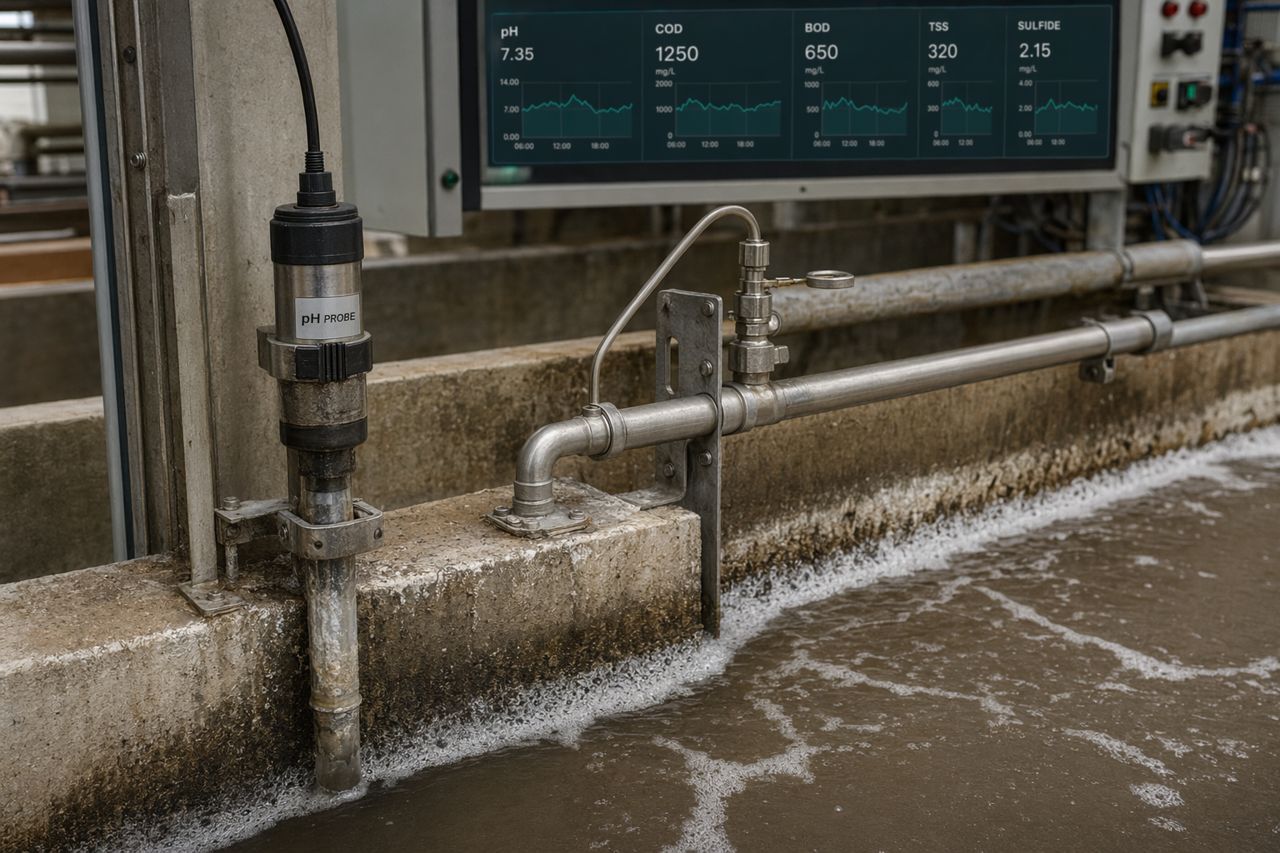
Soak liquors, fleshing wash, liming residues, deliming streams, dyehouse rinses, fatliquor carryover, cleaning water, and intermittent dump flows do not arrive evenly. They arrive in pulses. If those pulses pass directly to primary clarification, biological treatment, dissolved air flotation, or polishing, the ETP sees avoidable shocks in COD, BOD, TSS, sulfide, pH, odor load, and sludge volume.
Enzymesworks supplies enzyme solutions for tannery wastewater treatment where fat, protein, hair, hide residues, and mixed organic load create unstable operating conditions. In equalization, the objective is practical: keep the tank mixed, keep the load more uniform, reduce untreated pockets, and protect downstream process windows.
Why equalization decides downstream stability
A tannery ETP is usually designed around average flow and average loading. Daily operation is different. Production schedules, drum discharge timing, beamhouse chemistry, cleaning routines, and rework batches can push the equalization tank far outside its expected behavior.
Common symptoms include:
- pH spikes after liming or caustic cleaning discharge
- sulfide odor release during poor mixing or low aeration periods
- floating grease, scum, and fatliquor residues
- settled proteinaceous solids and hair fragments
- inconsistent feed to DAF, primary clarifier, or biological stage
- sudden oxygen demand downstream
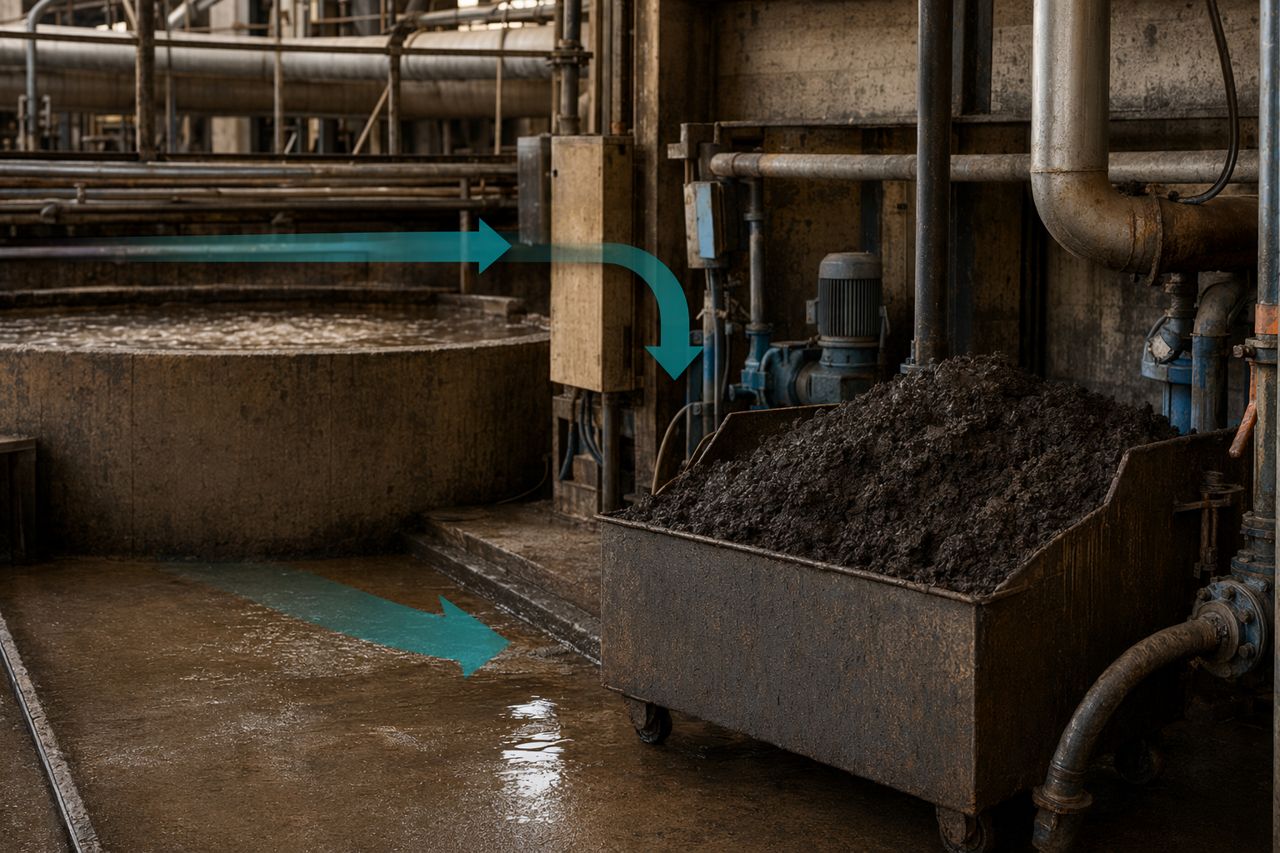
- heavier sludge with poor dewatering response
- compliance risk during production changeovers
Equalization control does not remove the need for primary, biological, or chemical treatment. It makes those steps more predictable.
Mixing: prevent layers, not just movement
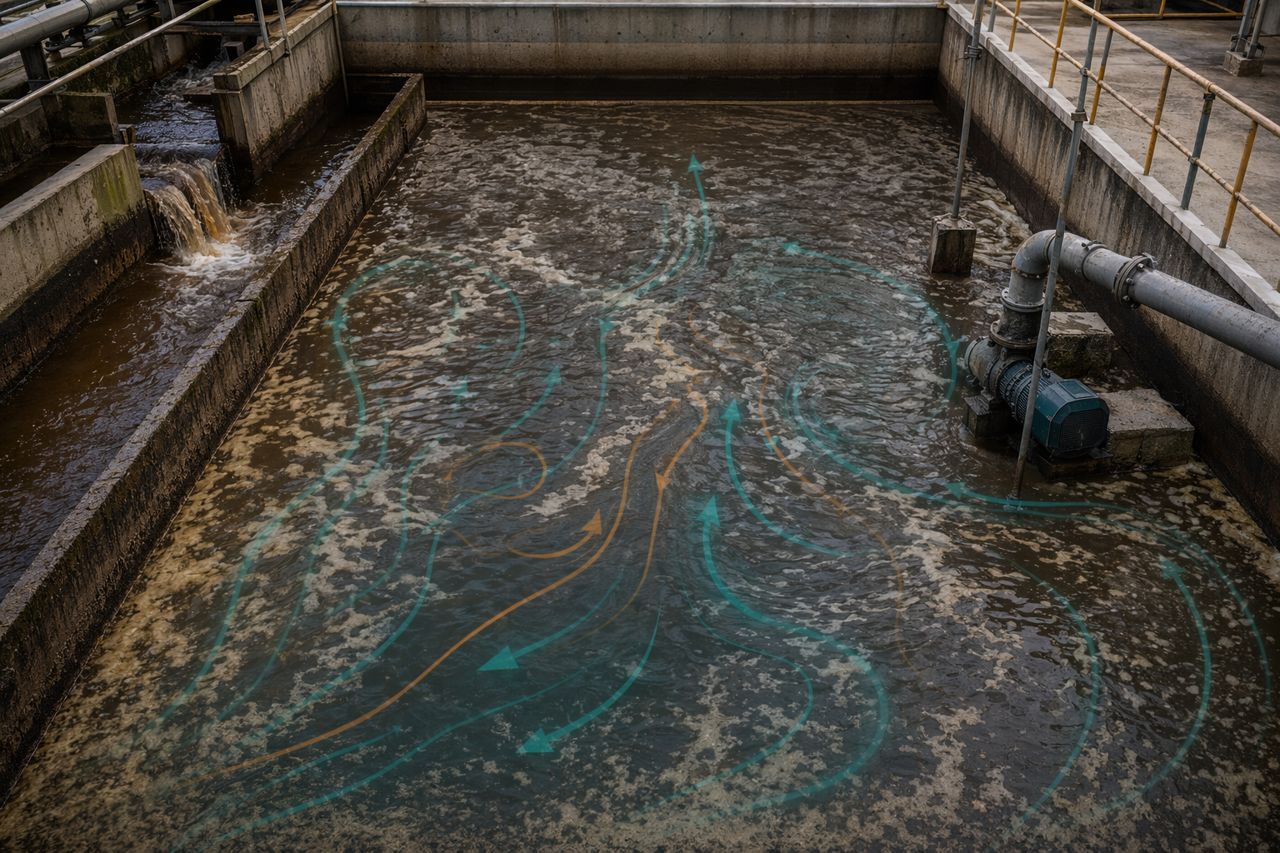
The equalization tank should prevent stratification. Surface movement alone is not enough. In tannery wastewater, the tank can separate into floating fat and scum, a mid-layer of variable soluble load, and a bottom layer containing heavier hide solids, lime sludge, grit, and settled protein material.
Good mixing aims to:
- keep suspended solids from forming anaerobic deposits
- reduce localized sulfide release
- disperse high-strength dump flows before forwarding
- improve contact between treatment chemistry and the wastewater matrix
- prevent dead zones near corners, baffles, pump sumps, and inlet points
Where air mixing is used, operators should watch foam, odor, and aerosol concerns. Where mechanical mixers are used, impeller location, bottom clearance, and tank geometry matter. A mixed tank is not automatically an equalized tank; the discharge pump strategy must also support stable feed.
Retention time: smooth the shock before it becomes a plant event
Retention in equalization should be long enough to dampen production pulses. If the tank turns over too quickly, downstream units still receive the full character of each discharge event. If retention is excessive and mixing is weak, septicity and odor can increase.
Useful control questions include:
- Which production streams create the strongest COD and sulfide peaks?
- Are liming and beamhouse discharges entering during low-flow periods?
- Does the tank level strategy allow enough volume for sudden dumps?
- Is the feed pump cycling aggressively instead of delivering a controlled flow?
- Are weekend or shift-change patterns creating stagnant hold periods?
For many leather goods facilities, equalization performance improves when tank level control, feed pump speed, and production discharge scheduling are reviewed together rather than separately.
pH swings: equalization is where correction becomes manageable
Tannery wastewater can move sharply between alkaline beamhouse streams and more neutral or acidic finishing-related rinses. pH swings affect sulfide behavior, coagulation chemistry, biological health, enzyme compatibility, and odor generation.
Equalization gives the plant time to measure and correct. However, correction should be steady. Overdosing acid or alkali into poorly mixed wastewater can create local extremes that carry forward into treatment stages.
Practical controls include:
- continuous pH monitoring in a representative mixed zone
- slower chemical addition with adequate mixing contact
- alarm points aligned with downstream process limits
- segregation of exceptional discharges where possible
- operating procedures for cleaning dumps and unusual production batches
Enzymesworks recommends evaluating enzyme use against the actual pH profile of the equalization tank, not a single grab sample. Beamhouse variability is the point; the dosing plan must respect it.
Load balancing: protect DAF, biology, and sludge handling
The equalization tank influences the whole ETP chain. When load is not balanced, treatment steps often respond with chemical overuse, unstable floc, foaming, odor complaints, biological stress, or higher sludge volume.
A controlled equalization tank can help operators achieve:
- more consistent feed concentration to primary treatment
- better chemical dosing response in coagulation and flocculation
- reduced shock loading to biological treatment
- steadier oxygen demand and aeration control
- fewer odor peaks around the headworks and sludge area
- more predictable sludge thickening and dewatering behavior
The commercial value is straightforward: fewer surprises, lower operational firefighting, and better confidence before discharge sampling.
Where enzymes fit in the equalization tank
In tannery wastewater, enzymes can support the breakdown and dispersion of proteinaceous residues, fats, greases, and complex organic deposits before they reach downstream units. The equalization tank can be a useful contact zone because it already provides retention, mixing, and access to variable load.
Enzymesworks enzyme programs are typically considered when the plant is dealing with:
- persistent fat and scum accumulation
- high protein load from hide, flesh, and beamhouse residues
- odor pressure associated with organic deposits
- sludge that is heavy, sticky, or difficult to handle
- inconsistent biological response after high-strength production days
- a need to improve treatability without major civil changes
Enzyme treatment is not a substitute for hydraulic control, pH control, or proper solids removal. It works best when equalization is already operated as a controlled process step.
Dosing strategy: start with the plant pattern
A reliable enzyme dosing plan begins with plant reality, not a generic dosage table. The right approach depends on production mix, wastewater temperature, pH range, retention profile, mixing energy, grease burden, protein load, sulfide management, and downstream treatment design.
Enzymesworks typically reviews:
- source streams feeding the equalization tank
- flow and load variation by shift or production day
- tank geometry, mixing method, and known dead zones
- pH and sulfide behavior across the operating week
- current chemical treatment program
- sludge generation and dewatering observations
- discharge compliance pressure points
A short plant trial can then compare baseline operation against enzyme-assisted operation using practical indicators such as odor trend, scum formation, sludge behavior, feed consistency, and downstream process stability.
Operator checklist for better equalization control
Use this checklist during plant review:
- Confirm all major tannery streams entering the tank and their timing.
- Map high-strength discharges from soaking, liming, fleshing, deliming, dyeing, fatliquoring, and cleaning.
- Check whether mixing reaches the bottom and corners of the tank.
- Inspect for floating fat, settled deposits, and anaerobic zones.
- Review pH trend data, not only daily grab readings.
- Compare feed pump operation with downstream treatment capacity.
- Identify odor events by time, discharge source, and tank level.
- Track sludge volume and dewatering behavior after production peaks.
- Evaluate whether enzyme contact time is realistic under current retention.
- Document changes before adjusting chemical or biological programs.
What environmental managers should expect from a supplier
An enzyme supplier for tannery wastewater treatment should understand the difference between general wastewater and leather processing effluent. The supplier should be comfortable discussing beamhouse residues, lime and sulfide carryover, fatliquor contribution, hide protein load, scum formation, and the practical limits of ETP operation.
Enzymesworks supports buyers with a plant-literate review of the equalization stage and downstream constraints. The goal is not to sell a standalone additive into an unstable system. The goal is to position enzyme chemistry where it can create measurable operational value within the existing treatment train.
Request a quote
If your leather goods ETP is dealing with odor peaks, fat and protein accumulation, variable COD or BOD loading, difficult sludge, or compliance pressure after production swings, request a quote through the on-site form.
Share your process type, equalization tank details, main wastewater concerns, and current treatment train. Enzymesworks will respond with an enzyme supply recommendation and practical trial approach for your tannery wastewater conditions.