Odor Complaints from Leather Processing Wastewater: Root Causes and Control Points
Odor complaints around a leather goods effluent treatment plant are rarely caused by one failure point. They usually build across the system: high-strength beamhouse flows, fat and protein carryover, sulfide release, dead zones in equalization, overloaded primary treatment, and biological stages forced into recovery mode.
For an environmental manager, the issue is not only nuisance odor. It is an early warning signal. If the plant is producing persistent reduced, fatty, or septic smells, the wastewater is often spending too long in the wrong condition before it reaches stable treatment.
Enzymesworks supplies enzyme solutions for tannery wastewater treatment designed for plants managing variable organic load, fat/protein residues, liming carryover, and sludge handling pressure. Enzymes do not replace good ETP control. They give operators another control point where difficult organic matter is accumulating faster than the plant can process it.
One-minute faceless explainer video
[Embedded video: odor complaints from leather processing wastewater — root causes and enzyme control points]
Why leather goods wastewater develops odor
Leather goods production can send a changing mix of organic and inorganic load to the ETP. Even where the factory is not processing raw hides from the earliest wet-end stages, wastewater can still contain residues from soaking, liming, deliming, fleshing, trimming, retanning, dyeing, fatliquoring, finishing cleanup, and floor washdown.
Odor intensity increases when these streams combine with:
- soluble and suspended protein residues
- residual animal fat, emulsified oils, and grease films
- sulfide-bearing or reducing wastewater pockets
- high alkalinity from liming-related carryover
- poor mixing in equalization or collection pits
- long retention in warm conditions
- insufficient aeration or overloaded biological treatment
- sludge that has turned septic before removal
The result is a recognizable site pattern: odor rises near collection channels, equalization tanks, primary separation, sludge holding, or overloaded aeration zones, then becomes a perimeter complaint when wind and temperature are unfavorable.
Common odor sources and what they indicate
1. Stagnant zones in collection and equalization
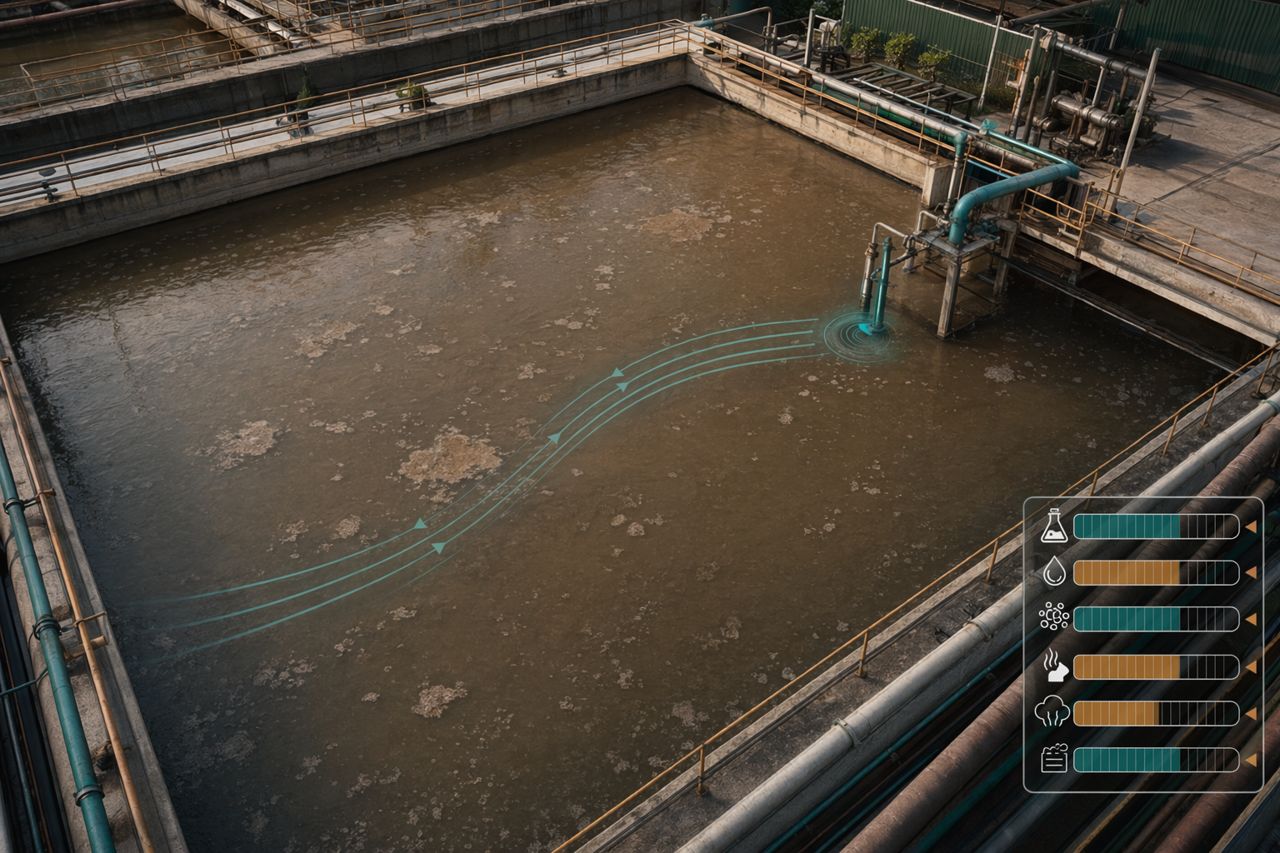
Equalization tanks are meant to buffer variability. If mixing is weak or tank geometry leaves corners with low movement, organic-rich wastewater can become reducing before it is treated. Proteinaceous matter breaks down unevenly, fats rise and trap solids, and sulfide risk can increase.
Typical signs include:
- strong odor after weekend or shift gaps
- floating scum mats or grease islands
- blackened deposits in corners or channels
- odor spikes when the tank is disturbed
- sudden biological upset after equalization drawdown
Control starts with hydraulic reality: confirm mixing coverage, remove deposits, avoid unnecessary hold time, and prevent concentrated side streams from sitting without movement.
2. Fat accumulation and grease mats
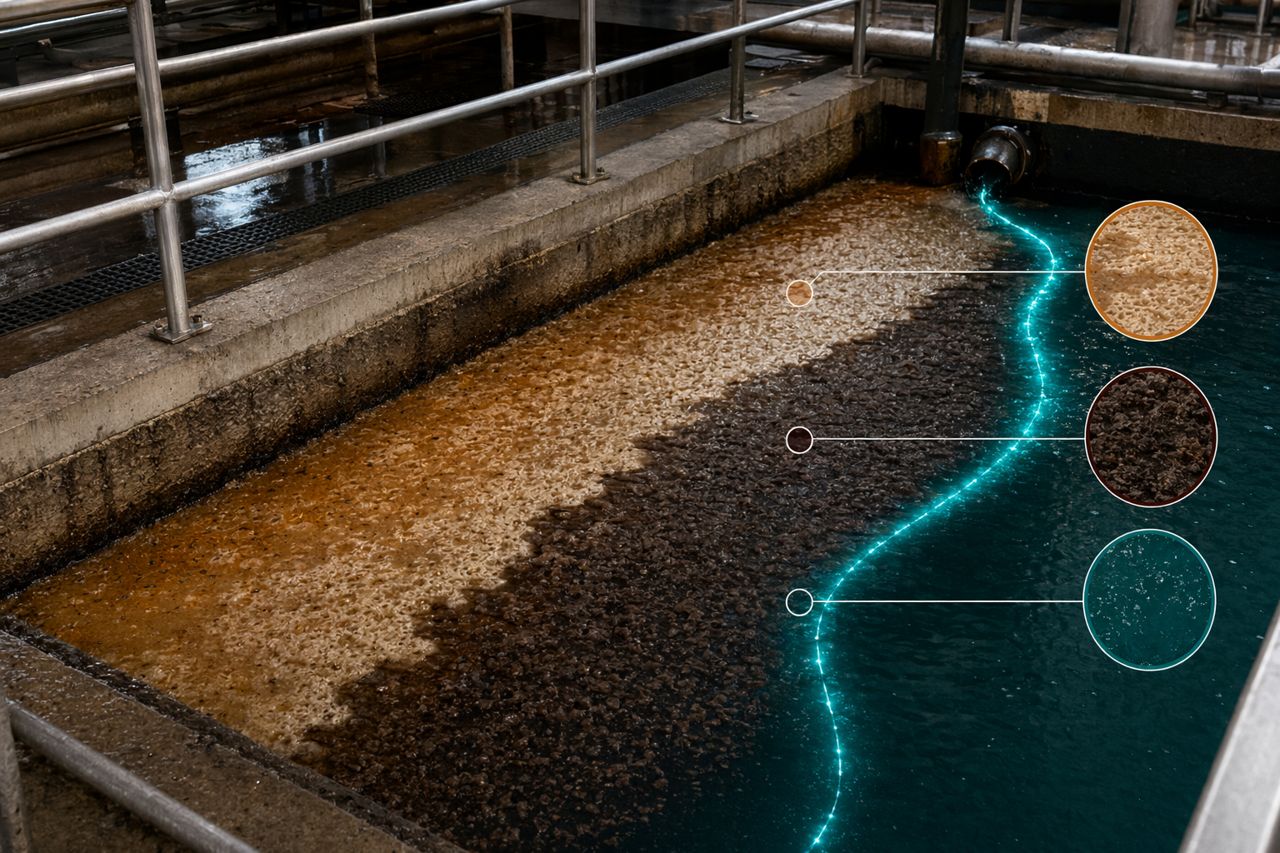
Leather wastewater often contains fats and oils that do not behave like simple municipal grease. Fatliquoring residues, natural fats, emulsified oils, and fine suspended solids can form stable surface layers or sticky deposits.
When fat accumulates, it creates three odor problems:
- it shields septic zones from oxygen transfer;
- it traps proteinaceous solids where they continue degrading;
- it sends intermittent slugs downstream when mats break apart.
This is where enzyme pre-conditioning can be useful. Lipase-focused support can help reduce the persistence of fat layers and improve the availability of organic matter for downstream treatment, provided the plant also controls mixing, pH, and solids removal.
3. Protein load from beamhouse-related residues
Protein residues are a major odor driver because they degrade into compounds associated with septic and putrefactive smells. Fine fleshings, hair fragments where relevant, soluble hide proteins, and suspended collagen-rich solids can move through screening and primary separation if capture is inconsistent.
Protease-focused enzyme solutions can help pre-treat protein-rich load before it becomes a persistent sludge and odor problem. The practical objective is not cosmetic. It is to reduce the amount of slow-degrading organic matter that accumulates in tanks, lines, and sludge handling areas.
4. Sulfide and reducing conditions
Where sulfide-bearing streams are present, odor risk becomes more than a nuisance issue. Reducing pockets, low dissolved oxygen, and unfavorable pH conditions can increase the release of sulfide odor. Enzymes are not a substitute for sulfide management, oxidation control, ventilation, or safety procedures.
However, reducing the organic conditions that support septic behavior can help keep the broader ETP more stable. Plants should treat sulfide control as a dedicated operational discipline and avoid relying on any single additive as the answer.
5. Overloaded biological treatment
Odor may appear near aeration tanks when the biological system is receiving uneven organic load, high fat carryover, excessive suspended solids, or shock conditions from upstream processing changes. The plant may still be running, but it is no longer operating with enough buffer.
Warning signs include:
- foaming or scum that tracks with production changes
- rising effluent COD or BOD trends
- unstable dissolved oxygen control
- poor settling or floating sludge
- odor after high-load batches enter the system
- operators increasing air or chemicals without lasting improvement
Pre-conditioning difficult fat and protein fractions upstream can support steadier biological response. It should be paired with equalization discipline, pH control, and routine sludge wasting.
Odor control points across a tannery ETP
A practical odor review should map where odor is generated, not only where it is noticed.
Collection channels and lift stations
Look for retained solids, slow flow, trapped grease, and anaerobic pockets. Small deposits can create strong odor if they remain warm and wet between production cycles.
Screens and primary solids capture
Odor often increases when fine organic solids pass through early removal and settle later in less controlled parts of the plant. Screening, skimming, and primary separation should be checked before assuming the biological stage is the root cause.
Equalization tank
This is a critical control point for leather goods wastewater. Confirm complete mixing, avoid dead zones, and monitor whether certain production shifts create repeat odor spikes. Equalization should buffer load, not become a septic reactor.
Primary treatment and flotation
Poor fat and suspended solids separation sends odor potential downstream. If scum is thick, sticky, or slow to break, enzyme support may be considered as part of a broader pre-treatment program.
Biological treatment
Odor from the biological stage often indicates upstream instability. Before changing the biology, check what is entering it: pH swings, fat carryover, sulfide influence, high suspended solids, or sudden COD/BOD load.
Sludge thickening and holding
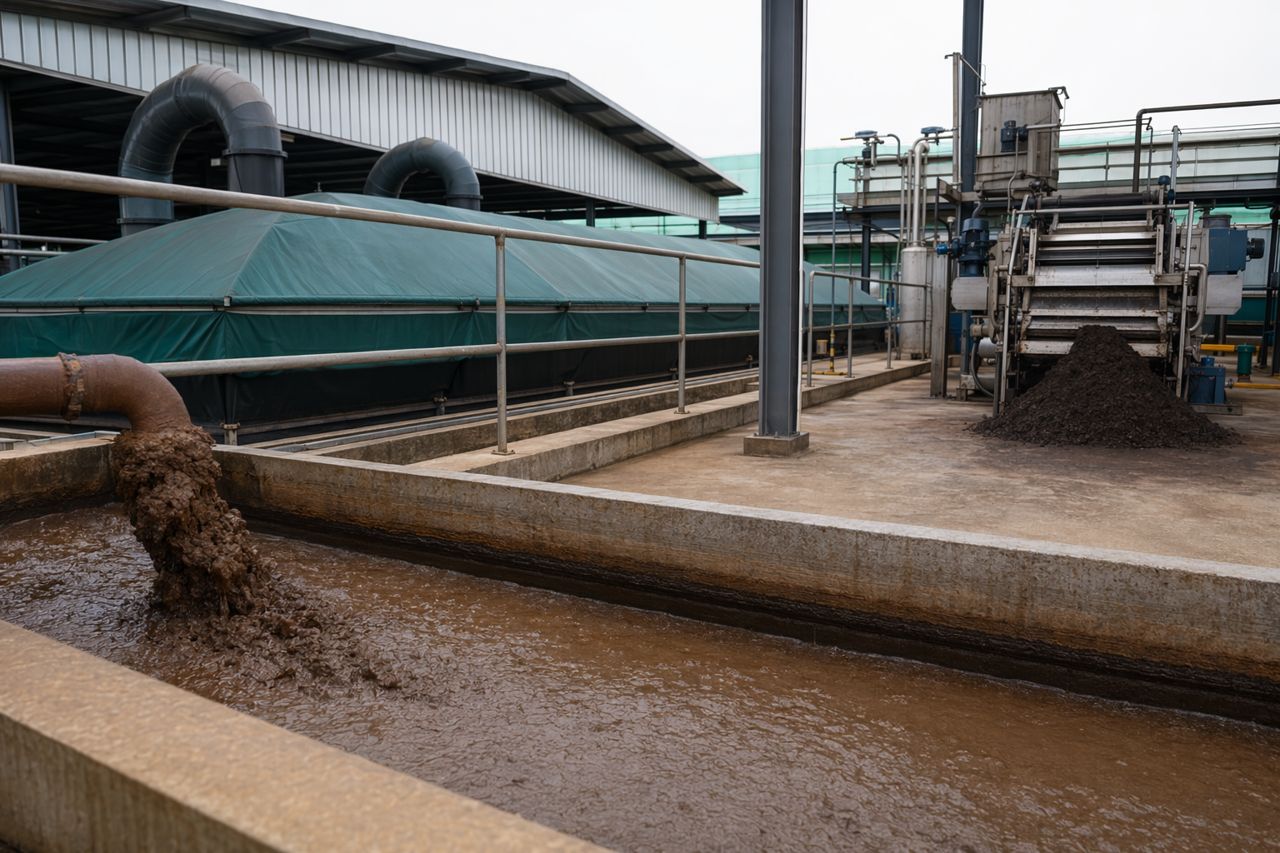
Sludge odor is a frequent complaint source. If sludge is stored too long or contains high fat/protein content, it can turn septic quickly. Better upstream breakdown and separation can improve sludge handling behavior, but storage time and housekeeping remain decisive.
Where enzyme treatment fits
Enzymesworks positions enzyme treatment as an upstream and midstream control point for difficult organic load. The aim is to help the ETP handle fat and protein residues before they accumulate as scum, septic sludge, or shock load to biology.
Potential benefits for leather goods ETP operators include:
- improved breakdown of fat and protein residues
- less persistent floating grease and organic scum
- reduced septic hold-up in equalization and sludge zones
- steadier feed characteristics to biological treatment
- improved sludge handling where organic residues are a driver
- fewer odor surprises after production variability
Enzyme use should be evaluated against real plant constraints: retention time, pH profile, temperature, mixing, chemical additions, sulfide control, and where the plant has safe and practical dosing access. Enzymesworks does not recommend treating enzymes as a stand-alone fix for poor hydraulics, inadequate aeration, or uncontrolled sulfide risk.
A field checklist before changing the treatment program
Before adding or adjusting a treatment aid, confirm the basics:
- Which production area is active before odor spikes?
- Is odor strongest at collection, equalization, primary separation, biology, or sludge holding?
- Are grease mats forming in predictable locations?
- Are settled deposits present in channels, tanks, or corners?
- Does pH shift sharply after liming-related or cleaning flows?
- Are sulfide-bearing streams controlled separately?
- Is equalization fully mixed during low-flow periods?
- Is the biological system receiving high fat or suspended solids carryover?
- Is sludge being removed before it turns septic?
This evidence helps determine whether the plant needs better housekeeping, hydraulic correction, sulfide management, primary separation improvement, enzyme pre-conditioning, or a combined program.
What to discuss with Enzymesworks
If odor complaints are becoming routine, the most useful starting point is a plant-specific review. Enzymesworks will want to understand:
- leather goods processes feeding the ETP
- wastewater segregation and equalization pattern
- known COD, BOD, TSS, sulfide, oil and grease, and pH trends
- where odor is observed and when it peaks
- existing chemical treatment and biological configuration
- sludge production, storage, and dewatering issues
- operating constraints for safe dosing and monitoring
From there, Enzymesworks can recommend an enzyme approach that fits the plant’s control points rather than forcing a generic wastewater product into a tannery problem.
Request a quote
Odor control in leather processing wastewater is a process issue, not a perfume issue. If your ETP is dealing with fat accumulation, protein-rich load, septic equalization, sludge odor, or unstable discharge trends, request a quote through the on-site contact form. Share your wastewater profile and current treatment constraints, and Enzymesworks will respond with a practical enzyme supply recommendation for your tannery ETP.