Enzyme dose planning for tannery ETPs
Tannery wastewater does not behave like a generic industrial effluent. Beamhouse carryover, liming residues, sulfide load, emulsified fat, hide protein, surfactants, drum wash variation, and batch discharge timing can all shift the load reaching equalization.
Enzymesworks supplies enzyme solutions for leather goods effluent treatment plants that need more stable discharge, lower odor pressure, improved sludge handling, and fewer compliance surprises. As an enzyme supplier for tannery wastewater treatment, we help environmental managers build a plant-level dosing plan around actual ETP constraints rather than one-size-fits-all dosing claims.
Our focus is practical: where the enzyme is introduced, what it is expected to change, how much contact time is available, and how the dosing plan fits your equalization, primary treatment, biological stage, and sludge management routine.
Where enzyme dosing can support tannery wastewater treatment
A tannery ETP may use enzyme dosing to support one or more process goals:
- Improve breakdown of protein-rich residues from hide processing and trimming contact streams
- Support fat and grease reduction where emulsified oils affect skimming, dissolved air flotation, or downstream biology
- Reduce odor load linked to putrescible organics and sulfide-related conditions
- Improve settleability and sludge texture when organic carryover is creating bulky or difficult-to-dewater sludge
- Help stabilize COD and BOD load entering the biological stage
- Reduce shock effects from batch discharges when the dosing point and retention time are properly selected
Enzyme dosing is not a substitute for pH control, equalization, aeration, sulfide management, primary separation, or responsible chemical treatment. It works best when positioned as a targeted biological aid within a controlled ETP operating window.
The planning framework Enzymesworks uses
1. Identify the wastewater stream
The first question is not “how much enzyme?” It is “which stream is creating the operational problem?”
Common tannery ETP streams include:
- Beamhouse wastewater with hair, hide protein, lime, sulfide, and high suspended solids
- Soak and wash water with variable salt and organic load
- Degreasing and fat-containing streams from specific leather goods operations
- Dyeing and finishing wash water with surfactants and color carryover
- Mixed equalization tank influent where several batch discharges combine
- Sludge return, thickener, or dewatering-related side streams
The dose plan changes depending on whether the target is fat hydrolysis, protein breakdown, odor reduction, improved clarification, or load smoothing before biological treatment.
2. Match enzyme type to the dominant load
Enzymesworks evaluates the effluent profile and recommends enzyme chemistry based on the dominant organic burden.
| Effluent challenge | Typical tannery source | Enzyme planning direction |
|---|---|---|
| Protein-rich suspended and dissolved organics | Beamhouse, fleshings contact water, hide residue | Protease-led treatment support |
| Fat, grease, and emulsified oils | Degreasing, fatliquor carryover, mixed process water | Lipase-led treatment support |
| Mixed organic load before biology | Equalization tank or balanced feed | Multi-enzyme approach |
| Odor pressure from organic stagnation | Holding tanks, equalization, sludge zones | Dosing with adequate mixing and retention time |
| Difficult sludge texture | Primary sludge, biological sludge, high organic carryover | Dose positioning to reduce load and improve handling |
Enzymesworks does not publish generic activity-unit tables because tannery wastewater varies too widely by hide source, process recipe, chemical use, batch scheduling, and ETP design. Instead, we support dose planning from your operating data and treatment objective.
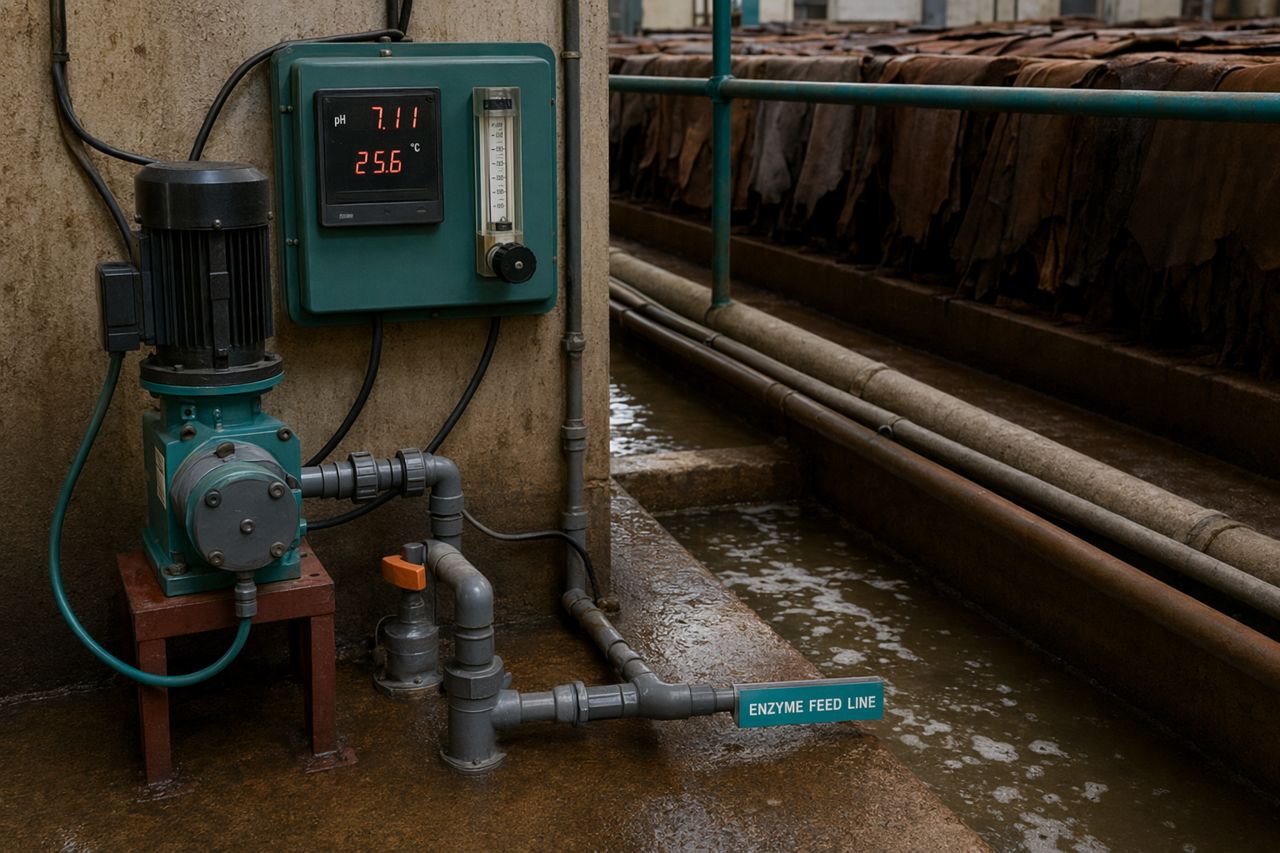
3. Confirm pH and temperature compatibility
Enzymes have operating windows. Tannery effluent can move outside those windows, especially where liming residues, alkaline cleaning, or acidic streams enter unevenly.
Before recommending a dosing plan, Enzymesworks reviews:
- Equalization tank pH range and daily swings
- Temperature profile across shifts and seasons
- Lime and sulfide carryover points
- Cleaning chemical exposure
- Coagulant, flocculant, and oxidant contact points
- Residence time before harsh pH correction or chemical treatment
The goal is to place the enzyme where it has enough compatible contact time to act before it is exposed to conditions that reduce performance.
4. Check retention time and mixing
A low-quality dosing plan ignores hydraulics. A plant-ready plan uses the available time in the system.
Enzymesworks looks at:
- Equalization tank working volume and turnover pattern
- Batch discharge timing from drums, paddles, and washing operations
- Mixing intensity and dead zones
- Pump cycle frequency
- Distance between dosing point and primary treatment
- Whether the dose sees the wastewater before or after pH correction
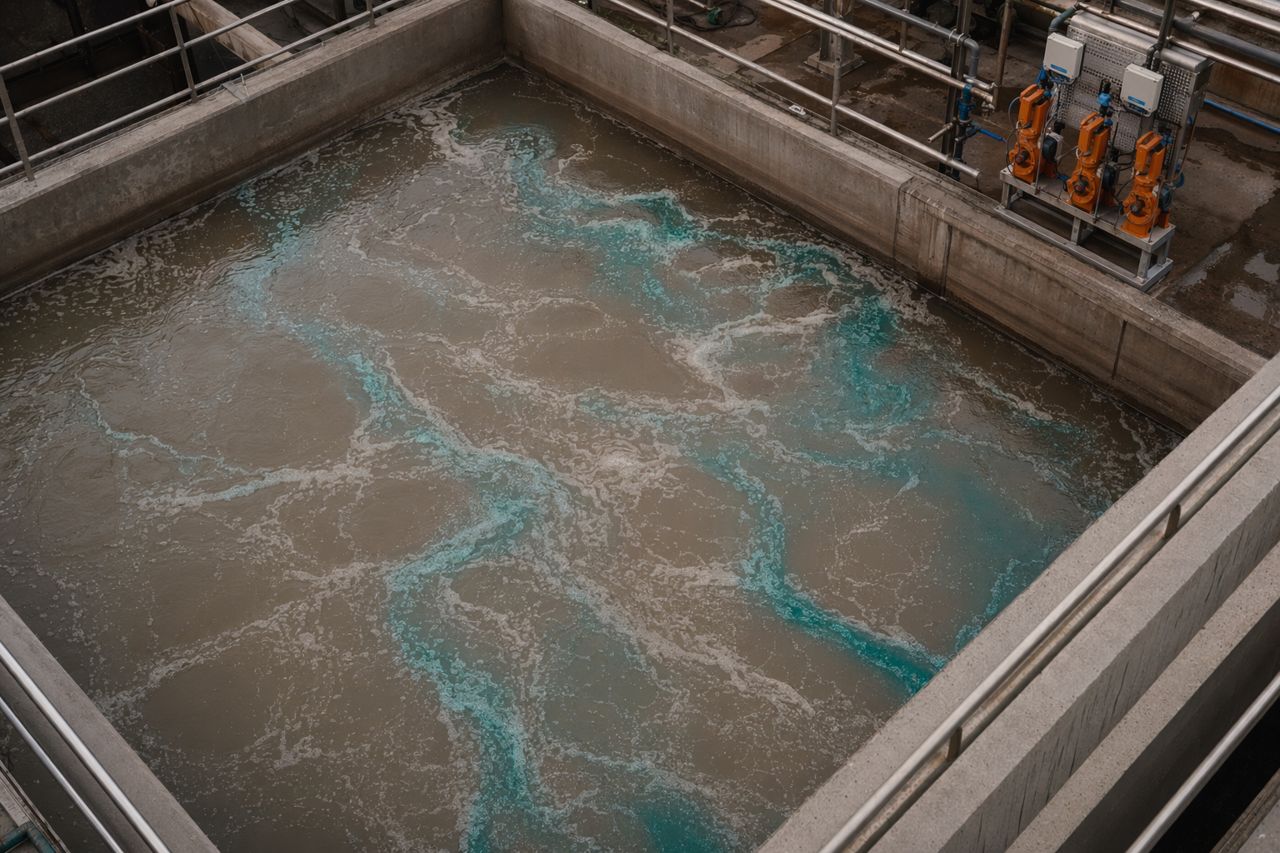
For many leather goods ETPs, the equalization tank is the most practical dosing zone because it gives the enzyme contact time across mixed process streams. In other plants, a side stream, pre-DAF inlet, or controlled feed line may be more suitable.
5. Sequence enzyme dosing around chemicals
Enzyme dosing should be sequenced to avoid unnecessary conflict with aggressive chemical treatment.
Key questions include:
- Are oxidants used near the proposed dosing point?
- Is the stream rapidly shifted to a pH outside the enzyme’s useful range?
- Are coagulants added before the enzyme has contact time?
- Is high sulfide or extreme alkalinity concentrated in a small portion of the tank?
- Is aeration creating enough mixing without stripping or foaming problems?
Enzymesworks helps buyers position the enzyme step so it supports the ETP rather than competing with existing chemical and biological controls.
What we ask for before quoting
To recommend the right enzyme solution and commercial dosing plan, Enzymesworks typically asks for:
- Daily wastewater flow and peak flow pattern
- Main production processes feeding the ETP
- Equalization tank volume and mixing method
- pH and temperature range
- Recent COD, BOD, TSS, oil and grease, sulfide, and sludge observations
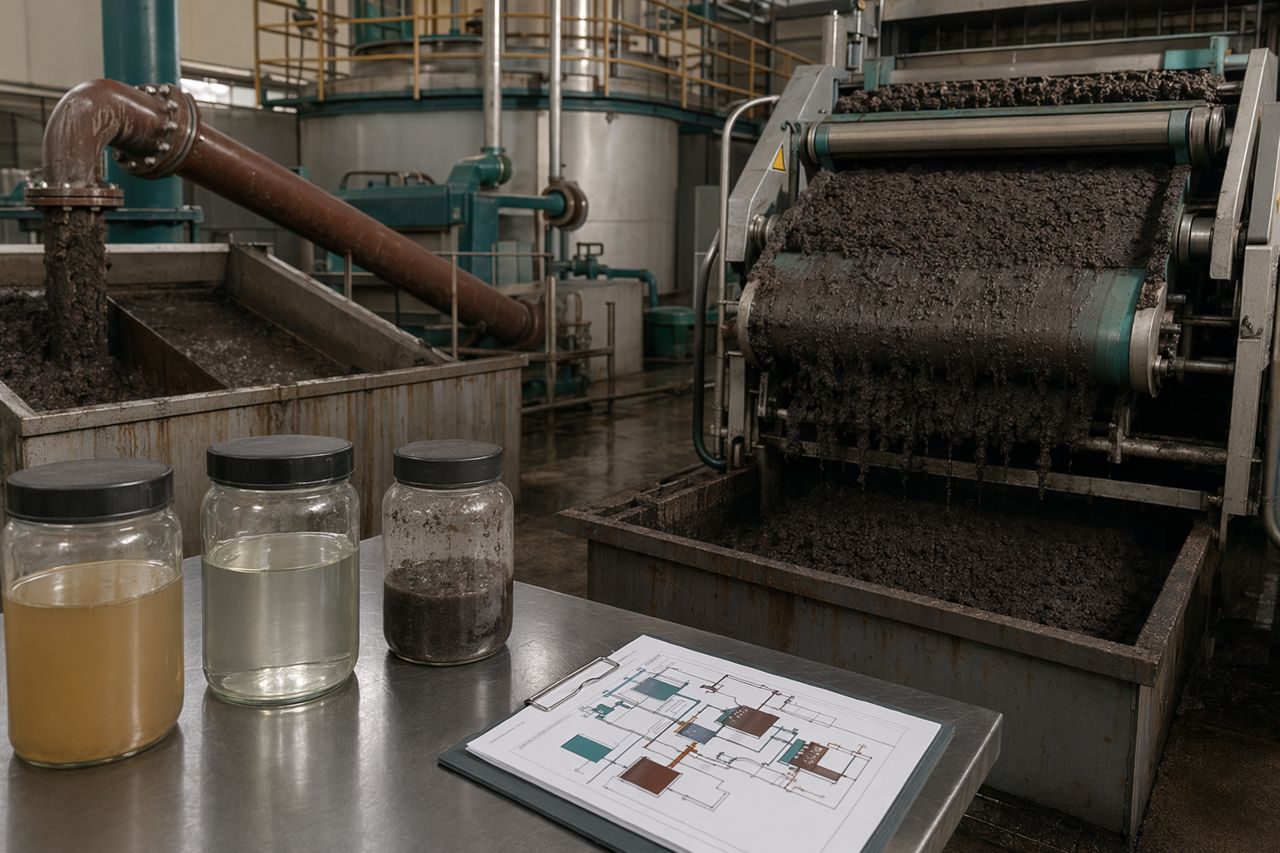
- Current treatment process diagram
- Chemicals used and dosing sequence
- Compliance pressure points or recurring exceedances
- Odor, foam, settling, or dewatering concerns
- Target outcome for the enzyme program
If your data is incomplete, we can still begin with a practical intake discussion. Many ETP problems are visible in process timing, tank behavior, sludge texture, and odor patterns before they are fully explained by lab values.
Practical outcomes buyers usually want
Enzymesworks’s enzyme supply discussions are tied to plant results, not laboratory promises. Common buyer goals include:
More stable biological loading
Enzyme treatment can help reduce sudden organic shocks entering the aeration stage when dosing is placed early enough and mixed properly.
Lower odor pressure
Where odor is driven by stagnant organic load, protein decay, or fat accumulation, enzyme dosing can support a cleaner equalization and sludge handling environment.
Better sludge handling
By acting on part of the organic burden before it accumulates, enzymes may support improved sludge texture, easier transfer, and more predictable dewatering behavior.
Improved primary separation support
When fat, protein, and suspended organics are better conditioned upstream, primary treatment may become easier to control.
Fewer compliance surprises
A planned enzyme program can help reduce variability in the load entering downstream treatment, especially where production schedules change by product line, hide source, or batch recipe.
What Enzymesworks does not do
Enzymesworks does not sell enzyme dosing as a magic correction for an overloaded or poorly controlled ETP.
We will not recommend an enzyme program without considering:
- pH control
- Hydraulic retention time
- Mixing quality
- Sulfide management
- Fat and solids separation
- Biological treatment health
- Sludge wasting and dewatering practice
- Existing chemical sequence
This keeps the recommendation realistic for the environmental manager who has to run the plant every day.
A clear route from inquiry to dosing plan
Step 1: Share operating context
Send your process overview, flow range, key wastewater parameters, and the problem you want to solve.
Step 2: Enzymesworks reviews compatibility
We assess likely enzyme fit, dosing point, sequencing risks, and whether your operating window is suitable.
Step 3: We define the commercial supply basis
Enzymesworks prepares a quote around the recommended enzyme solution, packaging format, expected application point, and implementation support.
Step 4: Plant team tracks the right indicators
During use, the plant should monitor the indicators tied to the goal: odor, scum, oil and grease, COD/BOD trend, settleability, sludge volume, dewatering behavior, or discharge stability.
Request a quote for tannery ETP enzyme supply
If you manage a leather goods effluent treatment plant and need a dosing plan built around real wastewater behavior, contact Enzymesworks.
Use the form below to share your ETP layout, operating conditions, wastewater concerns, and required supply volume. We will respond with a practical recommendation and quote for your plant.