Why Tannery ETPs Struggle After Production Changeovers
A tannery ETP rarely receives the same wastewater two days in a row. When production shifts from one hide type to another, from pale shades to dark dyeing, from a wet-blue flow to a retan-fatliquor-heavy schedule, or from routine finishing to a compressed dispatch plan, the wastewater character changes fast.
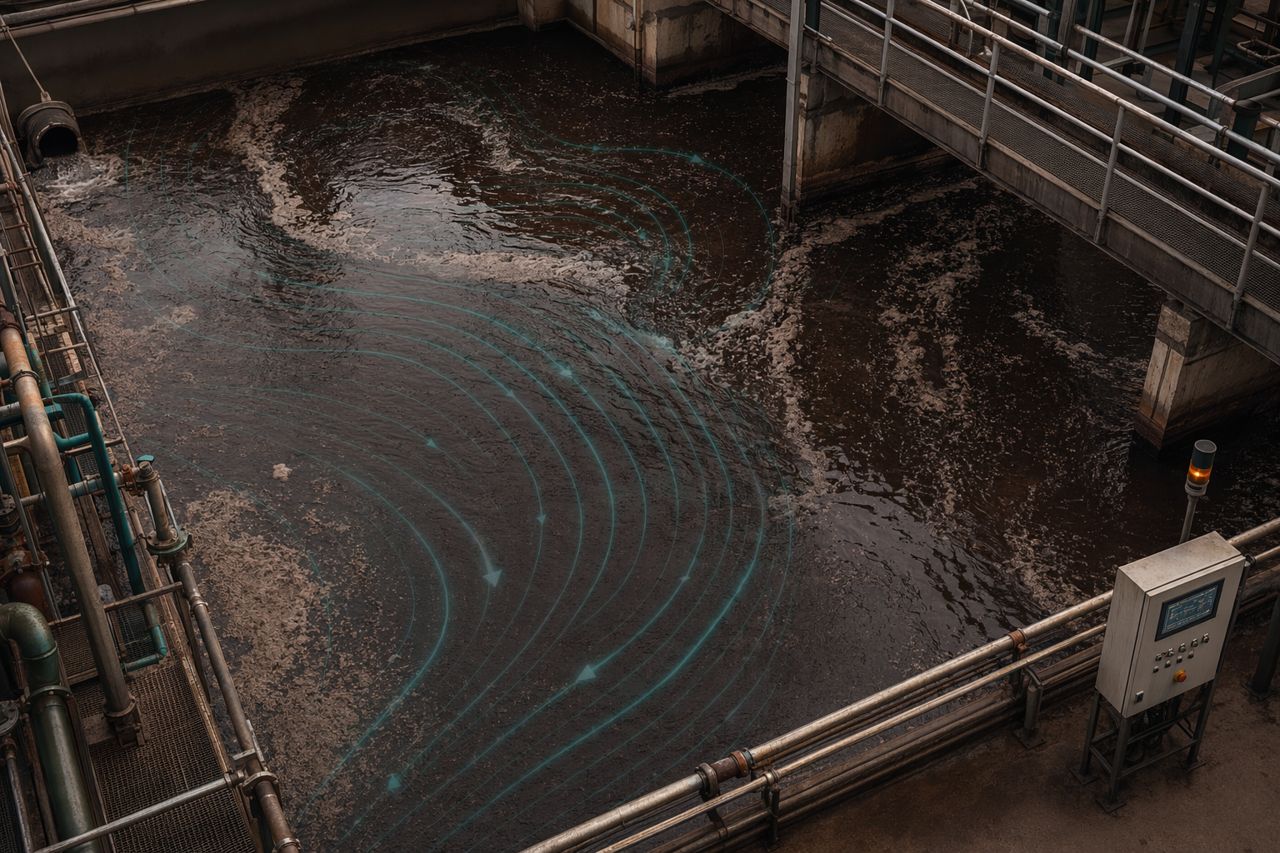
The plant may still look mechanically stable. Pumps run. Blowers run. Clarifiers turn. But the influent entering equalization is different: more soluble protein, more emulsified fat, more suspended leather fines, more sulfide carryover, more surfactant, more color, or a different pH history from beamhouse and post-tanning operations.
That is why changeovers often show up as delayed ETP trouble: odor peaks, poor settling, higher sludge volume, floating scum, unstable biological response, and compliance anxiety at the final discharge point.
Enzymesworks supplies enzyme solutions for tannery wastewater treatment where beamhouse variability, fat and protein loading, liming residues, and ETP operating constraints are part of the daily reality.
The changeover problem is not just “more load”
Many ETP upsets are described as overload events. Sometimes that is true. But after a production changeover, the issue is often more specific than volume or total organic strength.
The wastewater matrix changes.
A shift in raw material, chemical recipe, dye shade, retanning package, or finishing schedule can alter how fats, proteins, suspended solids, sulfides, surfactants, and salts behave inside the treatment system. The result is a plant that receives a different kind of pollution, not only a larger amount of it.
For an environmental manager, this matters because standard operating responses may not match the cause. Increasing aeration may not solve persistent fat. More polymer may not correct upstream protein breakdown. Longer settling may not fix floating grease or dispersed solids. More sludge wasting may not restore biological stability if the influent continues to change.
Where the variability starts
Hide and skin type
Different incoming materials carry different natural fat, collagen residue, hair load, fleshing carryover, and dirt. A change in hide type can alter both the organic load and the way that load separates in primary treatment.
Higher fat content can create floating layers, sticky scum, and poor oxygen transfer. Higher proteinaceous load can increase putrefactive odor risk and produce a stronger response in equalization and biological treatment.
Beamhouse recipe changes
Soaking, liming, unhairing, deliming, bating, and fleshing flows are among the most disruptive contributors to tannery effluent. Liming residues, sulfide, suspended hair or hair breakdown products, and alkaline protein streams can arrive unevenly when production is compressed or recipe timing changes.
Even when the ETP has equalization, shock characteristics can remain. Equalization blends the flow; it does not remove the chemistry.
Retanning, dyeing, and fatliquoring shifts
Post-tanning operations can contribute soluble organics, dyes, syntans, surfactants, emulsified oils, and fine suspended matter. A shift from lighter to darker shades, or from standard articles to heavily fatliquored leather goods materials, can increase color, COD pressure, and emulsion stability.
The ETP may then see slower separation, more floating material, and biological stages that respond unevenly.
Finishing schedule pressure
When finishing and dispatch schedules drive production changes, wastewater can arrive in concentrated windows. Cleaning operations, washdowns, drum changes, and batch drains can create short influent pulses with a different character from the daily average.
This is where a plant that normally meets discharge expectations can suddenly become difficult to control.
What operators usually see first
After a production changeover, the earliest signs are often physical and sensory before they appear in formal discharge data.
Common indicators include:
- stronger odor at equalization or primary treatment;
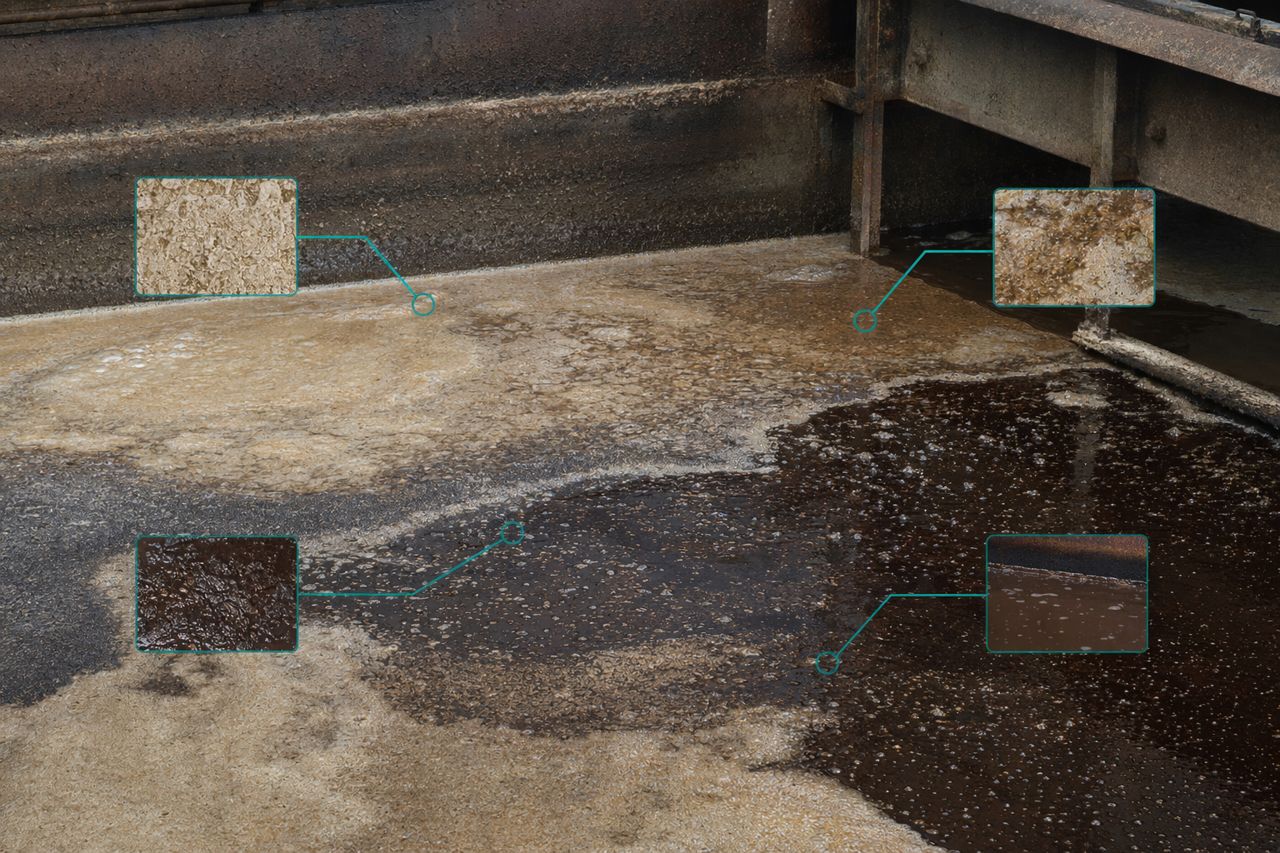
- heavier scum or fat blankets;
- sticky sludge that resists dewatering;
- floating solids in clarifiers;
- inconsistent floc formation;
- dark or variable color carryover;
- biological foam changes;
- slower recovery after peak flows;
- more frequent polymer adjustment;
- higher final discharge risk.
These symptoms are not random. They usually point to a wastewater matrix that contains fats, proteins, sulfides, suspended solids, and surfactant effects in a different balance than the ETP was tuned for.
Why equalization cannot solve everything
Equalization is essential in a tannery ETP. It protects downstream treatment from extreme peaks and helps stabilize pH, hydraulic flow, and pollutant distribution.
But equalization is not conversion.
If the tank receives a strong protein and fat pulse, equalization can dilute and mix it, but the material still needs to be broken down, separated, or biologically treated. If sulfide-rich alkaline streams enter unevenly, odor and toxicity risk can remain. If emulsified fats are stabilized by surfactants, they may pass further downstream than expected.
A well-run ETP uses equalization as a buffer, not as the only response.
Why enzymes are considered in tannery wastewater treatment
Enzyme treatment is used to improve how specific organic components are conditioned before or within the treatment train. In tannery wastewater, the practical interest is typically around proteins, fats, suspended organic matter, and sludge behavior.
For an environmental manager, the value is not theoretical. The question is whether the treatment can help the plant handle variable influent more predictably without forcing constant emergency adjustment.
A well-selected enzyme solution may support:
- improved breakdown of proteinaceous material;
- better handling of fat and grease deposits;
- reduced odor pressure from putrescible organic load;
- more manageable sludge texture;
- smoother biological loading after equalization;
- fewer visible scum and floating solids issues;
- more consistent upstream conditioning during recipe changes.
The best results come from matching the enzyme approach to the actual tannery flow: beamhouse contribution, fatliquor load, equalization design, retention time, pH exposure, temperature conditions, aeration pattern, and sludge handling route.
Why generic wastewater treatment language is not enough
Tannery effluent is not the same as food processing wastewater, municipal sewage, textile effluent, or general industrial drain water. Leather goods production brings its own operational mix: collagen-derived proteins, sulfide chemistry, lime carryover, fleshing residues, dye and retan streams, emulsified fatliquors, finishing residues, and high variability between batches.
That is why an enzyme supplier for tannery wastewater treatment must understand the source of the load, not only the treatment plant diagram.
A generic product recommendation may miss the reason an ETP struggles after changeovers. The issue may be upstream sequencing. It may be a fatliquor-heavy article. It may be beamhouse discharge timing. It may be sludge recirculation stress. It may be a combination of all of these.
Enzymesworks looks at the production pattern and the ETP constraint together.
Where Enzymesworks fits in the treatment train
Enzymesworks enzyme solutions are typically evaluated where they can condition the organic load before it creates downstream instability. Depending on the site, that may involve use around equalization, primary conditioning, sludge management support, or a defined side-stream where fat and protein load is concentrated.
The practical objective is controlled improvement, not a promise that enzymes replace core ETP operations. Screening, equalization, pH control, aeration, clarification, sludge wasting, and dewatering still matter.
Enzymes are most useful when they are integrated into the way the plant actually runs.
Questions to ask after a changeover upset
When a tannery ETP becomes unstable after production changes, start with operational evidence:
- Which production schedule changed: hide type, beamhouse recipe, retan, dye shade, fatliquor, finishing, or cleaning?
- Did the upset begin at equalization, primary treatment, biological treatment, clarification, or sludge handling?
- Was the first symptom odor, scum, foam, poor settling, color carryover, or dewatering difficulty?
- Did pH control remain stable through the changeover?
- Did fat or protein-rich streams arrive in a compressed window?
- Were polymer settings changed, and did the response hold?
- Did sludge become lighter, stickier, more odorous, or harder to dewater?
- Did the plant recover naturally, or did instability persist into the next production cycle?
These answers help separate a short hydraulic disturbance from a true wastewater character change.
What to share when requesting enzyme support
To evaluate an enzyme approach for tannery wastewater treatment, Enzymesworks typically needs a practical picture of the plant and the production pattern.
Useful information includes:
- leather goods article types and recent production changes;
- beamhouse and post-tanning wastewater segregation practices;
- equalization tank arrangement and mixing pattern;
- main problem symptoms after changeovers;
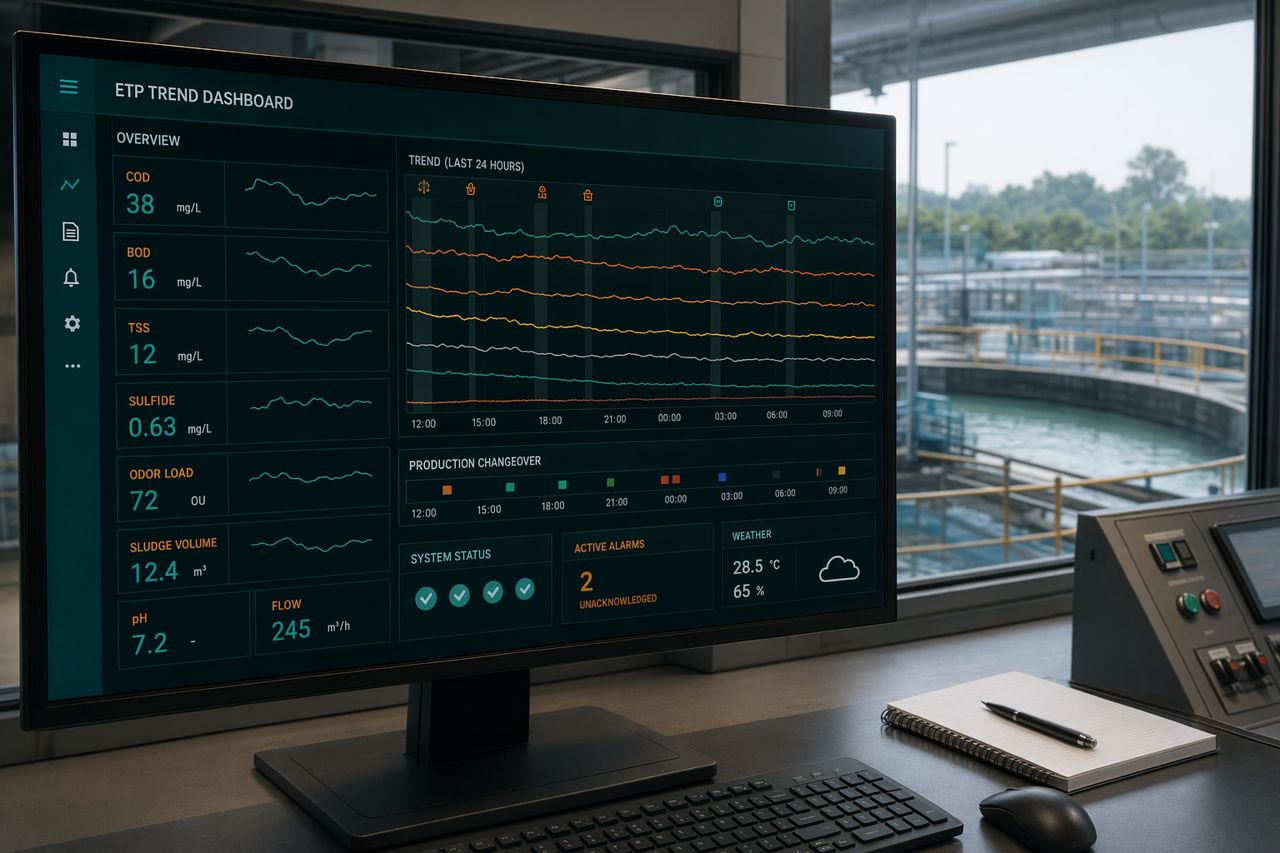
- typical COD, BOD, TSS, sulfide, oil and grease, odor, and sludge concerns;
- pH control points and operating range;
- biological treatment configuration;
- sludge thickening and dewatering method;
- chemical treatment points already in use;
- compliance pressure points and discharge expectations.
This does not need to be perfect before a first conversation. A clear operating description is often enough to identify whether enzyme conditioning is worth evaluating.
The commercial value: fewer surprises, steadier treatment
For leather goods manufacturers, ETP instability is not only a technical issue. It affects production confidence, environmental reporting, housekeeping, sludge disposal, operator workload, and customer audit readiness.
A better-conditioned wastewater stream can reduce the number of days when the plant is forced into reactive mode. The value is in steadier discharge control, better odor management, improved sludge handling, and less disruption after production changeovers.
That is the standard Enzymesworks works toward: practical enzyme support for tannery wastewater treatment, fitted to the way the plant actually receives and treats leather effluent.
Request a quote
If your tannery ETP struggles after hide, recipe, dye, fatliquor, or finishing changeovers, Enzymesworks can help assess whether an enzyme solution is a practical fit.
Use the on-site request a quote form and include the main symptoms, where they appear in the ETP, and the type of production change that usually triggers them. Enzymesworks will review the application and respond with a treatment-oriented recommendation.